
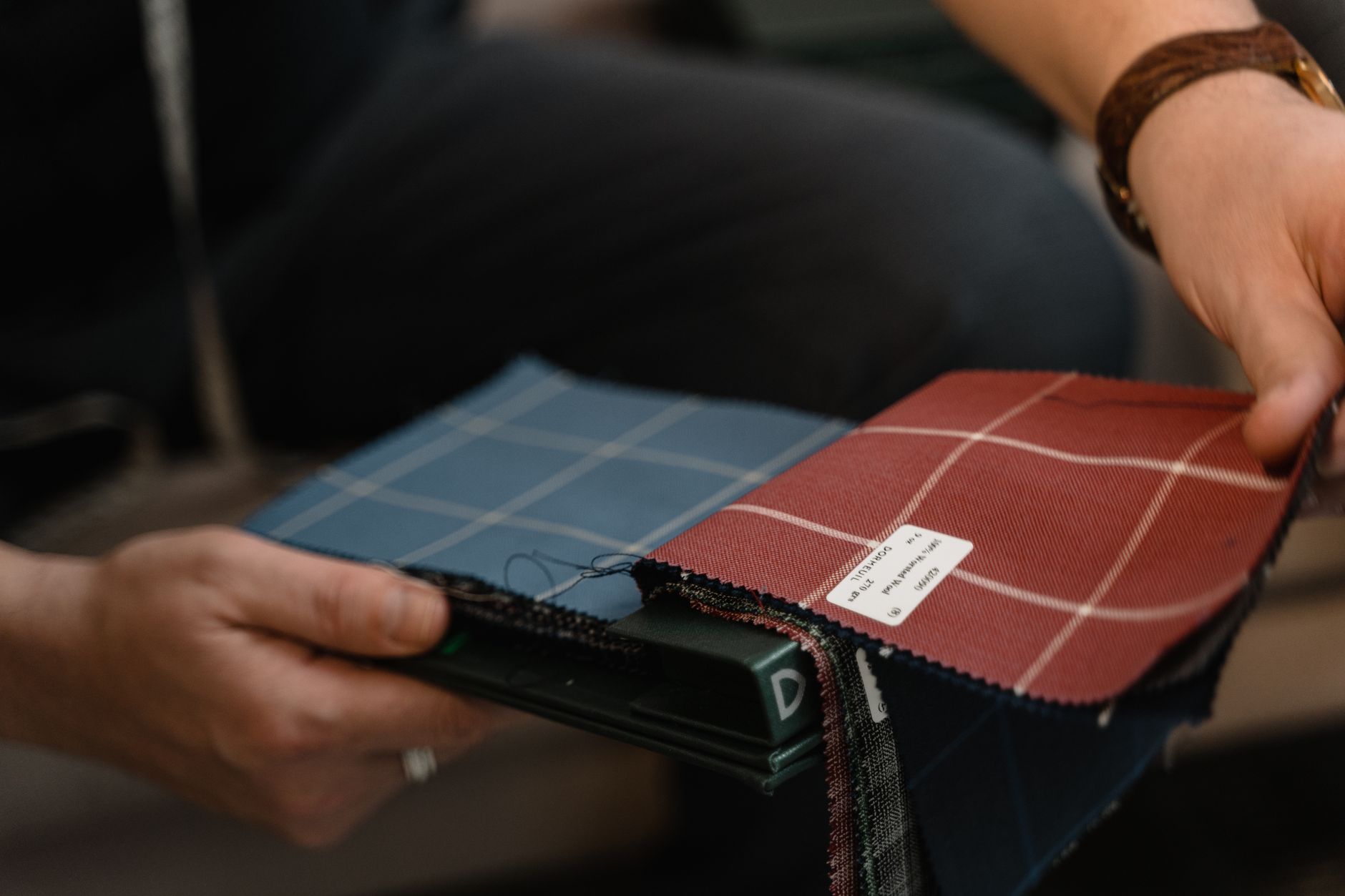
You’ve probably done this: held up a tiny sweater in a store, felt how soft it was, and thought, yes, this is the one. But softness at first touch doesn’t tell the whole story — not for a dog or cat who will wear it for hours, roll on the rug, and maybe nap in it. What matters is how the fabric behaves against skin over a whole afternoon. The good news: you can judge almost any fabric yourself, in about a minute, before your pet ever tries it on.
Why the fabric matters more than the print or the buttons
Pets have thinner skin than we do in many places, and they can’t tell us when something itches or rubs. A seam that feels fine to your fingertips can be scratchy against a Yorkie’s chest. A fabric that doesn’t breathe traps heat and moisture, which leads to discomfort and irritation. And unlike us, a pet can’t simply take a jacket off when they’ve had enough — they rely on you to choose something they can wear comfortably.
Here’s the useful part: comfort isn’t about one “good” fibre and one “bad” one. A structured tweed, a lace trim, a sparkly detail and a smooth knit can all be comfortable — it depends on how the inside is finished and how the piece fits.
What a good fabric feels like — whatever the style
- A smooth inner face. Run the back of your hand along the inside of the garment. It should glide, not drag. This is where structured fabrics and decorative trim either pass or fail: a well-lined piece feels as smooth inside as it looks outside.
- Trim and edges that sit flat. Lace, sequins and other decoration belong on the outer layer, sewn flat and kept clear of the leg openings and the chest. Applied properly, they add charm without touching skin.
- Enough give. A little stretch at the chest and legs lets the fabric move with your pet instead of pulling against them.
- Air that can get through. Breathable fabric keeps a pet from overheating indoors, which is where most pets actually wear clothes.
- Flat seams and soft elastic. Covered elastic, smooth seams and removable tags affect daily comfort far more than the fibre name on the label.
- No strong smell. If a piece arrives with a sharp factory or dye odour, air it out and wash it before it goes near your pet.
How to test a fabric in about a minute
No textile degree required — just a short routine that works in a shop, at home, or when a parcel arrives.
- The wrist test. Rub the fabric’s inner face against the thin skin inside your wrist. If it tickles, scratches or feels clammy to you, it will feel worse on your pet.
- The inner-seam sweep. Run two fingers along every seam and edge on the inside — neckline, leg openings, hem. This is where rubbing starts. Pay extra attention to lace and decorative edges: if a trim scratches your fingertip, it will scratch a belly.
- The stretch test. Gently pull the fabric across the chest and along the leg openings. It should spring back a little. If it feels rigid, movement will create friction at the edges.
- The breathability test. Hold the fabric up to a lamp or blow through it. Air that passes easily means the fabric can release heat — which matters most for indoor wear.
- The shake test. Give the garment a gentle shake. Loose glitter or fibres that shed onto your hand are a sign to keep looking.
- The wash test. Wash once before the first wear, in cool water with a pet-safe detergent. That removes finishing residue — and shows you whether the fabric softens, pills or bleeds.
Then watch your pet, not the label
The final test is your pet. A piece that fits well and feels good usually disappears into the background of their day. Scratching, biting at the fabric, rubbing against furniture or trying to wriggle out of an armhole are all useful signals that something needs adjusting.
Fit and fabric go together
Even the softest fabric causes trouble if it’s too tight or too loose. Aim for a close, non-restrictive fit — you should be able to slide two fingers under the hem. For sizing step by step, our guide on how to measure your dog for the perfect fit walks through it. When you browse, look for flat seams, covered elastic and removable tags; those small details do most of the work for everyday comfort.
A few words on washing
Whatever the fabric, it needs regular washing — especially if your pet wears clothes often. Use a pet-safe, fragrance-free detergent, skip fabric softener (it leaves a residue), and air-dry where you can to keep fibres soft. A gentle, cool-water cycle helps the garment hold its shape and stay comfortable.
If your pet has a known allergy or skin condition, check with your vet before introducing a new fabric. For most pets, though, the routine is simple: check the inside as carefully as the outside, test it against your own wrist first, and let your pet’s behaviour be the final judge.