
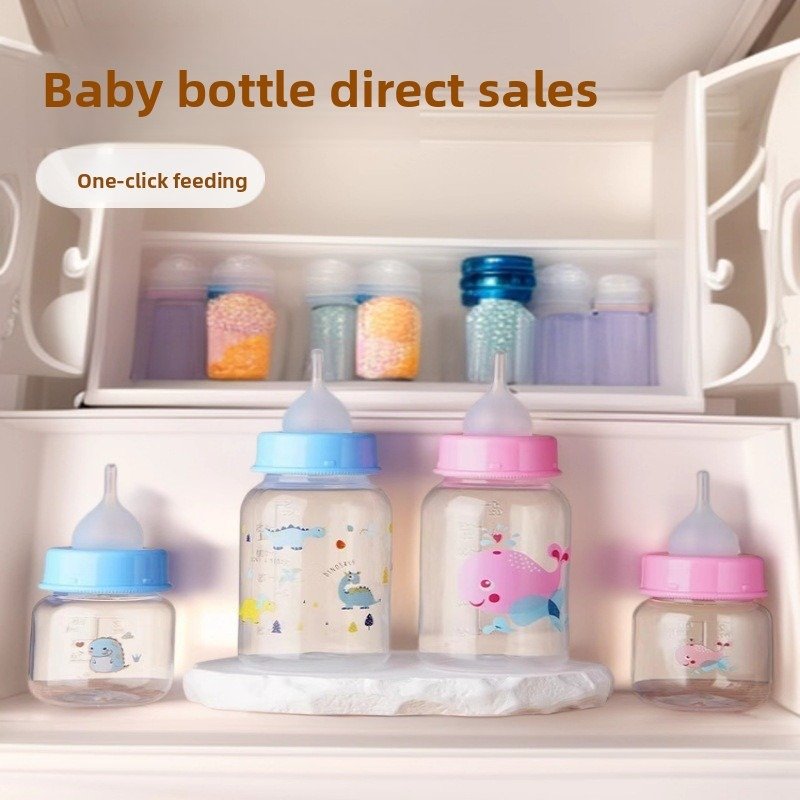
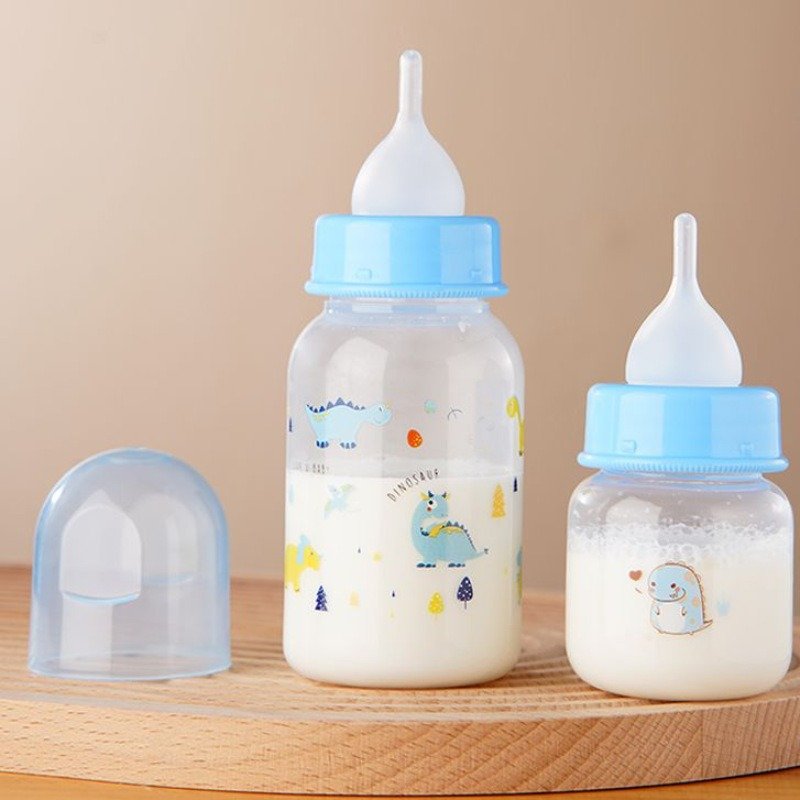
Most people buying a nursing bottle for a kitten are doing it at 11pm on day one, with a rescue kitten or a rejected pup who won’t latch. The kit arrives, the bottle fills, and then the real question shows up: at what angle do you actually hold it?
That angle is the whole game with this bottle — and it’s the one thing the instruction card usually skips.
Why the nipple angle does the work
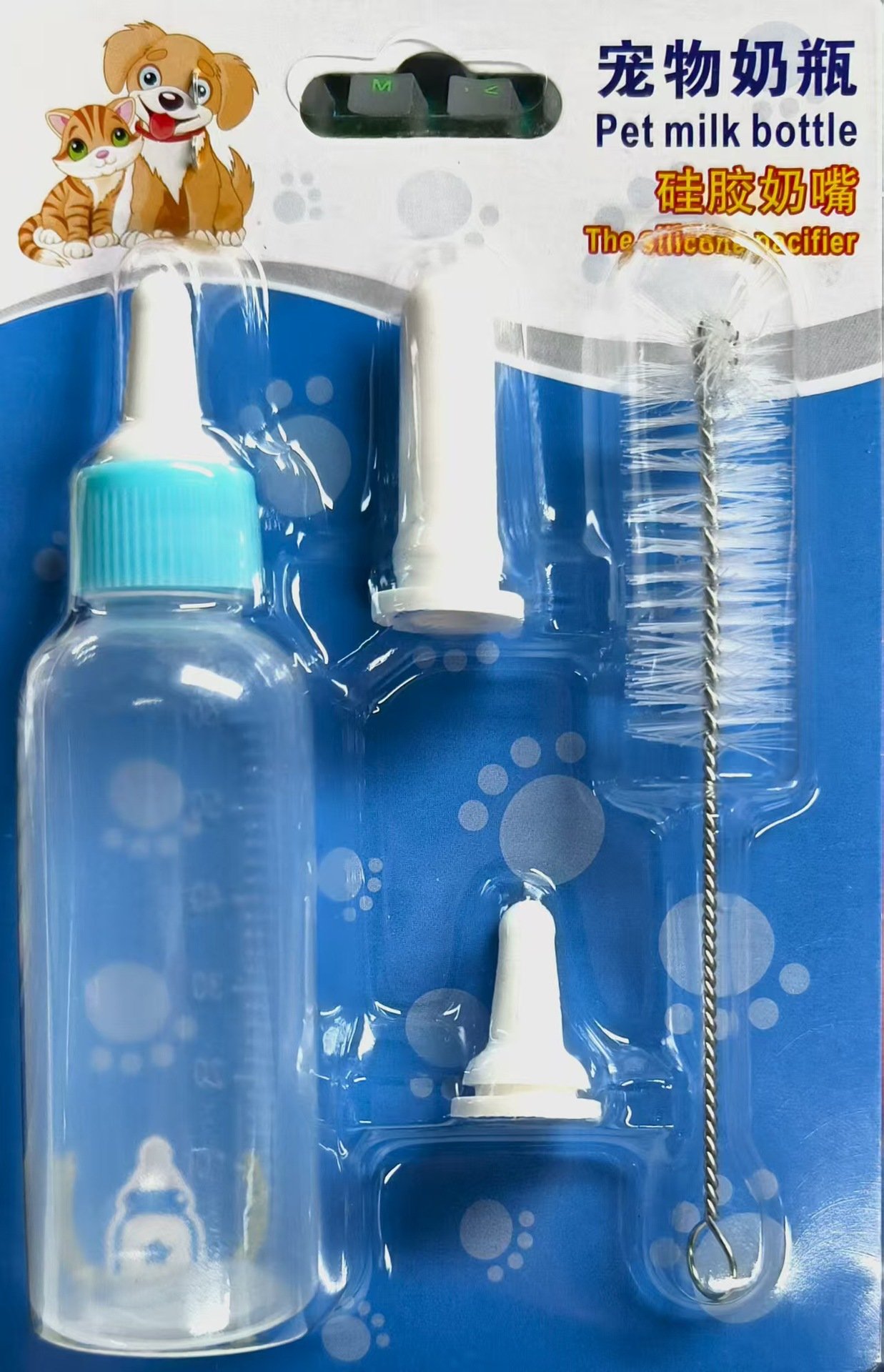
This is a 60ml silicone bottle with a soft nipple, sold as a set in blue or pink, plain or printed. The bottle body is silicone, which means it gives slightly when you squeeze it. That squeeze is how you control flow — but only if the bottle is tipped correctly.
Hold the bottle too flat and milk sits at the back of the nipple with no pressure behind it. The kitten works hard, gets frustrated, swallows air. Tip it too steep and the flow runs faster than a tiny kitten can swallow, which is where most of the mess and worry comes from.
The working position: kitten on its belly, not on its back. Head level or very slightly raised. Bottle angled so the nipple stays full of milk the entire time, with the base of the bottle just above the kitten’s head. Your wrist does the tilting; the kitten stays flat.
- Nipple full, bottle level-ish. If you can see a bubble sitting against the nipple tip, tilt a little steeper.
- One drop, not a stream. Tip the bottle upside down and squeeze gently. One slow drop is right. A fast drip means less squeeze, not less angle.
- Let the kitten set the pace. If it pulls away or milk bubbles at the nose, pause, keep the nipple in place, and let it restart.
The 60ml size suits this because a small kitten takes only a few millilitres per feed — the smaller bottle is easier to control with a light hand than a larger one. The same method works for puppies on the 125ml printed version, just with more volume per feed.
What to check before the first feed
Warm the milk to lukewarm, test a drop on your inner wrist, and squeeze the nipple once before you offer it so you know how much pressure gives you one drop. That single test squeeze is the difference between a calm feed and a 3am cleanup.
If you’re feeding a whole litter, having two bottles in rotation keeps things moving while one is being washed. Start with the 60ml silicone nursing bottle set for the runty ones and size up as they grow.